CHRISTIAN EDUCATION
Gospel Addict
Understanding Gospel-Driven Sanctification
"The gospel is not just the entry point of the Christian life — it is the ongoing power for Christian living."
"For I am not ashamed of the gospel, because it is the power of God that brings salvation to everyone who believes."
— Romans 1:16
Core Truth
The same gospel that saves us also sanctifies us. We don't graduate from the gospel — we go deeper into it every day.
- ✓ Gospel saves us (Justification)
- ✓ Gospel grows us (Sanctification)
- ✓ Gospel sustains us (Daily Power)
Explore Topics
FOUNDATION
What Is the Gospel?
The Good News of Jesus Christ
The gospel is the announcement that God has acted in history through the life, death, and resurrection of Jesus Christ to rescue sinners and reconcile them to Himself. It is not advice to follow but news to believe.
The 5 Points of the Gospel
God Is Holy
God is perfectly holy, righteous, and just. His nature demands that sin be punished. He cannot overlook or ignore sin without violating His own character.
"For all have sinned and fall short of the glory of God." — Romans 3:23
We Are Sinners
Every human being has sinned against God and is therefore under His just condemnation. We are not merely imperfect — we are spiritually dead and enemies of God.
"For the wages of sin is death." — Romans 6:23a
Christ Died for Sinners
In an act of infinite love and grace, God sent His Son Jesus Christ to live the perfect life we could not live, and to die the death we deserved. He bore the full wrath of God on our behalf.
"But God demonstrates his own love for us in this: While we were still sinners, Christ died for us." — Romans 5:8
He Rose from the Dead
Three days after His death, Jesus rose bodily from the grave, defeating sin, death, and the devil. His resurrection is the guarantee of our justification and future resurrection.
"He was delivered over to death for our sins and was raised to life for our justification." — Romans 4:25
Salvation Is by Faith Alone
The benefits of Christ's work are received through faith alone — not by works, religious performance, or moral achievement. We are justified by trusting in Christ and His finished work.
"For it is by grace you have been saved, through faith — and this is not from yourselves, it is the gift of God." — Ephesians 2:8
The ABCD of the Gospel
Admit — I am a sinner in need of a Savior
Romans 3:23
Believe — Jesus died and rose for me
Romans 5:8, 1 Corinthians 15:3-4
Confess — Jesus is Lord of my life
Romans 10:9-10
Depend — I trust in Christ alone, not my works
Ephesians 2:8-9
GROWTH IN GRACE
Gospel & Sanctification
Growing in Holiness Through the Gospel
Most Christians understand that the gospel saves us. But many fail to grasp that the same gospel that justifies us also sanctifies us. We don't graduate from the gospel — we go deeper into it.
The Holiness Growth Diagram
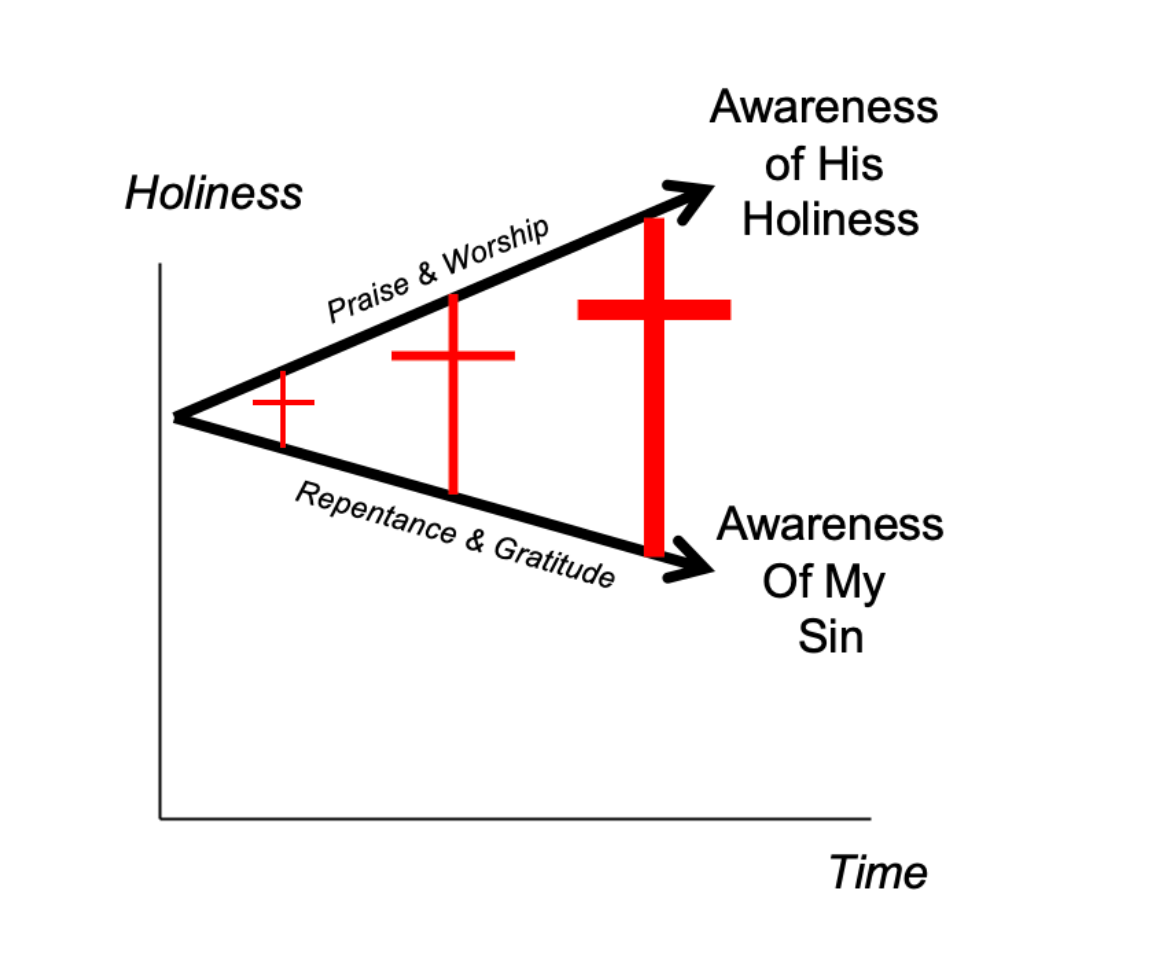
This diagram shows what genuine spiritual growth looks like. As we mature in Christ, two things happen simultaneously:
- We become more aware of God's holiness (upper line — Praise & Worship)
- We become more aware of our own sinfulness (lower line — Repentance & Gratitude)
- The red crosses show that as we grow, we need the gospel MORE, not less
↑ Awareness of God's Holiness
As we grow in Christ, we see God more clearly — His perfect righteousness, His infinite purity, His absolute justice. This awareness produces awe, reverence, and worship.
When was the last time you were genuinely awed by the holiness of God?
↓ Awareness of Our Own Sin
Paradoxically, as we grow in holiness, we become MORE aware of our sinfulness — not less. The closer we get to the light, the more we see the dirt.
Are you more or less aware of your sin than five years ago? What does that tell you?
"I am more sinful than I ever dared believe, yet more loved than I ever dared hope."
— Gospel Paradox
⚠️ The Common Mistake
Many Christians try to grow in holiness by focusing on their behavior — trying harder, doing more, being better. But this is moralism, not gospel-driven sanctification. True growth comes from meditating on and applying the gospel to every area of life.
TRUTH & GRACE
The Gospel Balance
Truth & Grace in Perfect Tension
"For the law was given through Moses; grace and truth came through Jesus Christ." — John 1:17
The gospel holds Truth and Grace in perfect balance. Without Truth, we drift into moral relativism and hedonism. Without Grace, we drift into moralism and legalism. Jesus alone holds these two in perfect tension.
The Balance Diagram
These four diagrams show how the gospel keeps us balanced between two equal and opposite dangers — legalism on one side and relativism on the other. Christ, the cross, and the gospel are the only true center.
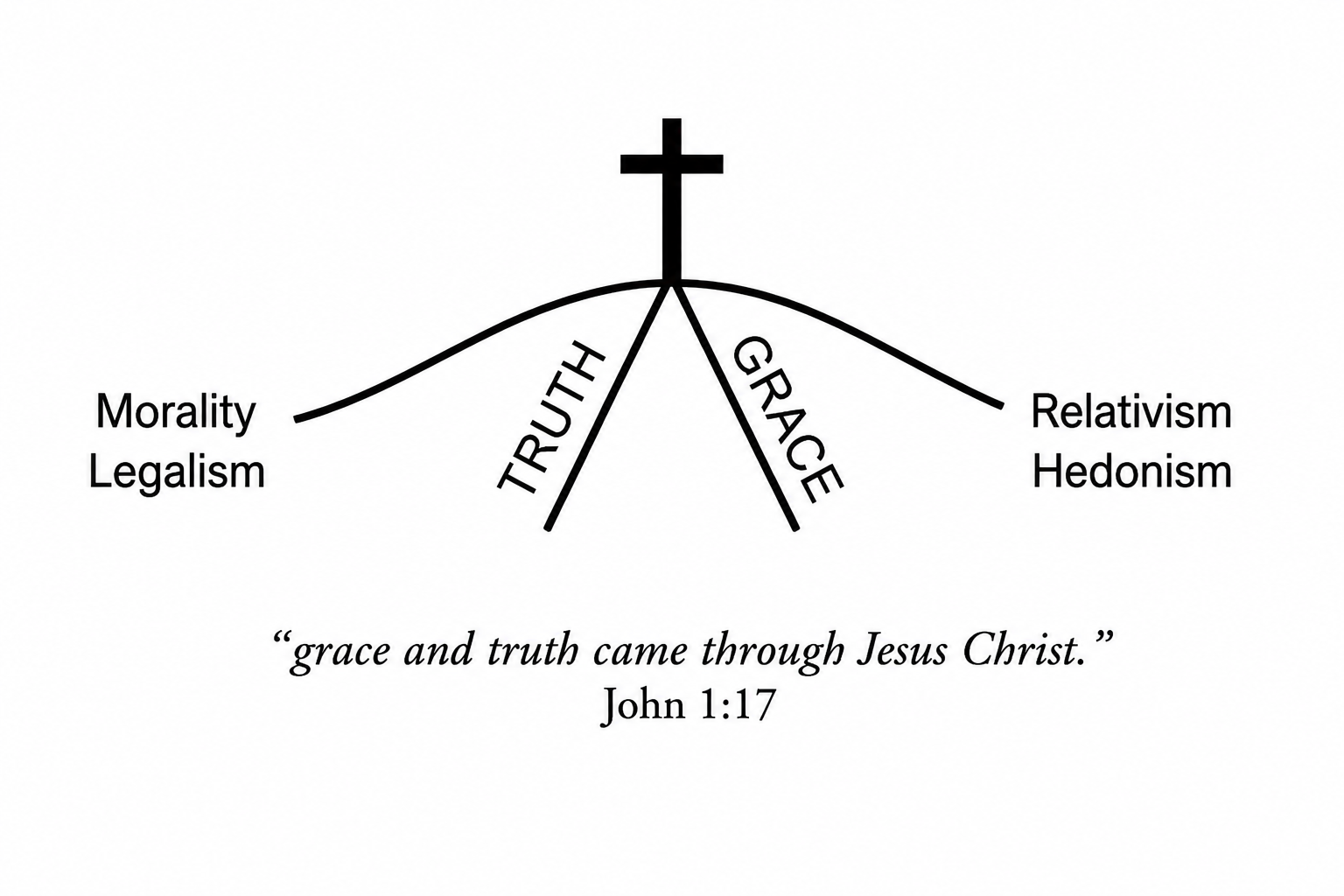
The cross stands at the center of Truth and Grace. Jesus came "full of grace and truth" (John 1:14). Neither side can be removed without distorting the gospel.
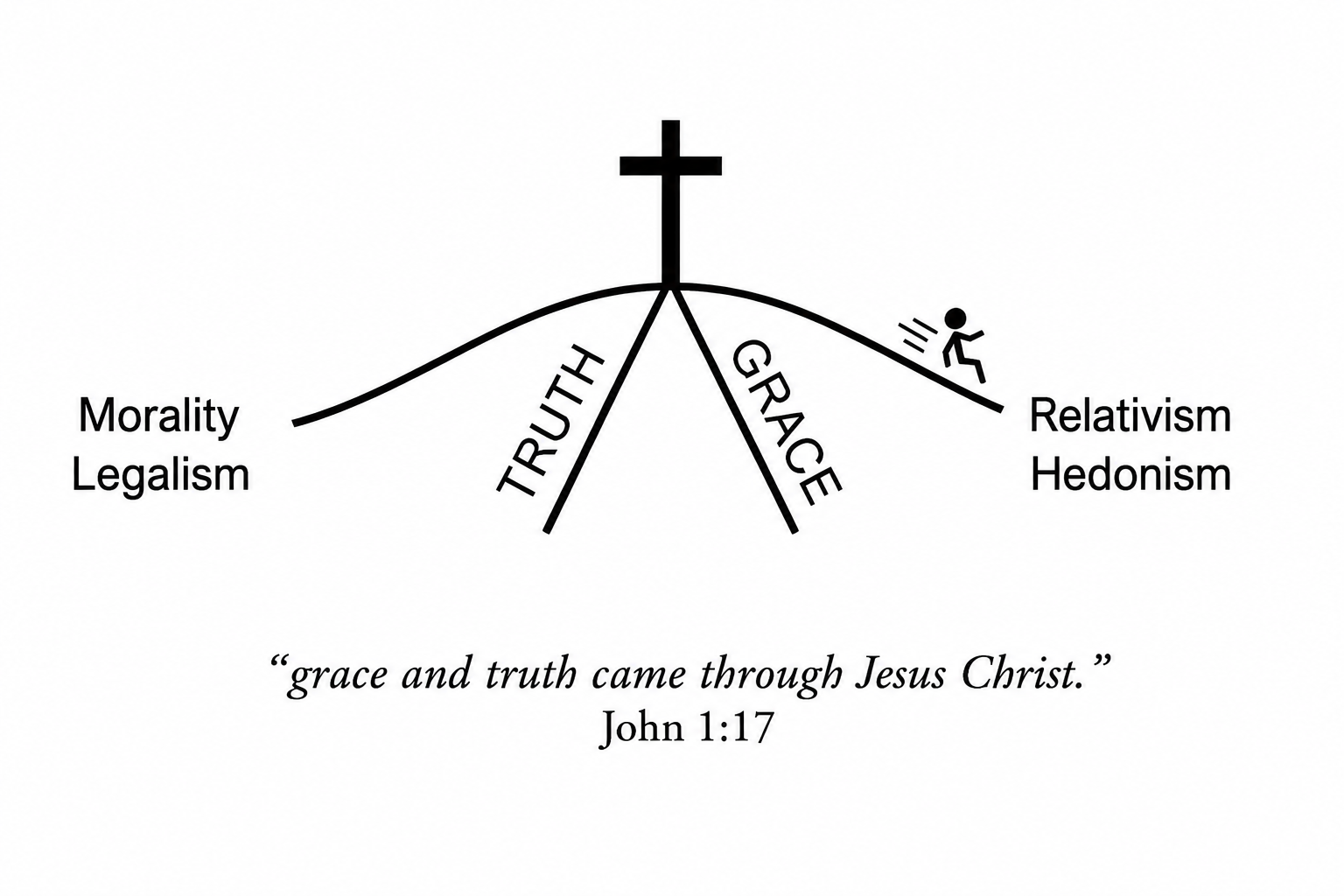
When grace is emphasized without truth, we slide toward relativism and hedonism — using freedom as a license to sin and treating God's commands as optional.
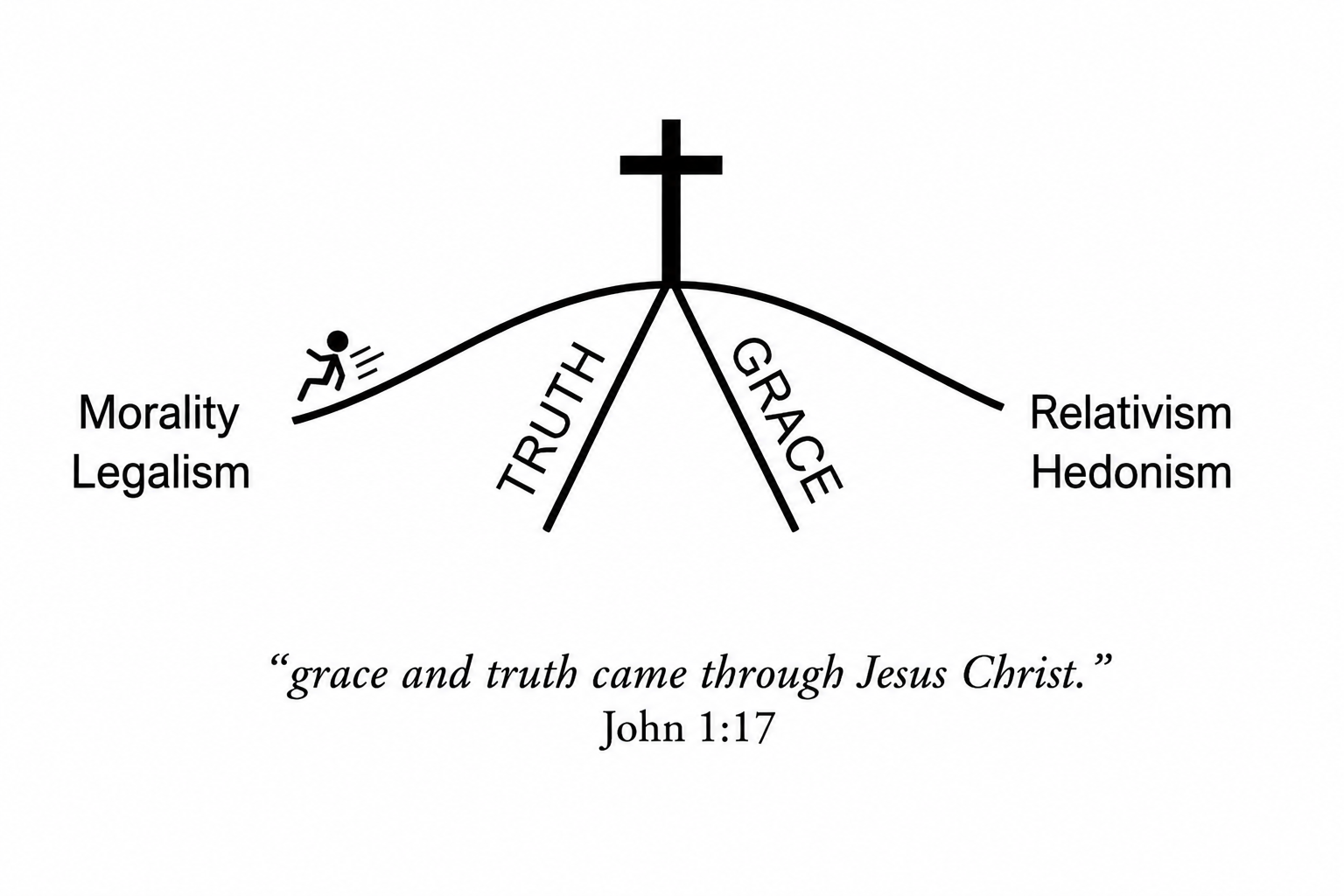
When truth is emphasized without grace, we slide toward moralism and legalism — trying to earn God's favor through rule-keeping and measuring ourselves by our performance.
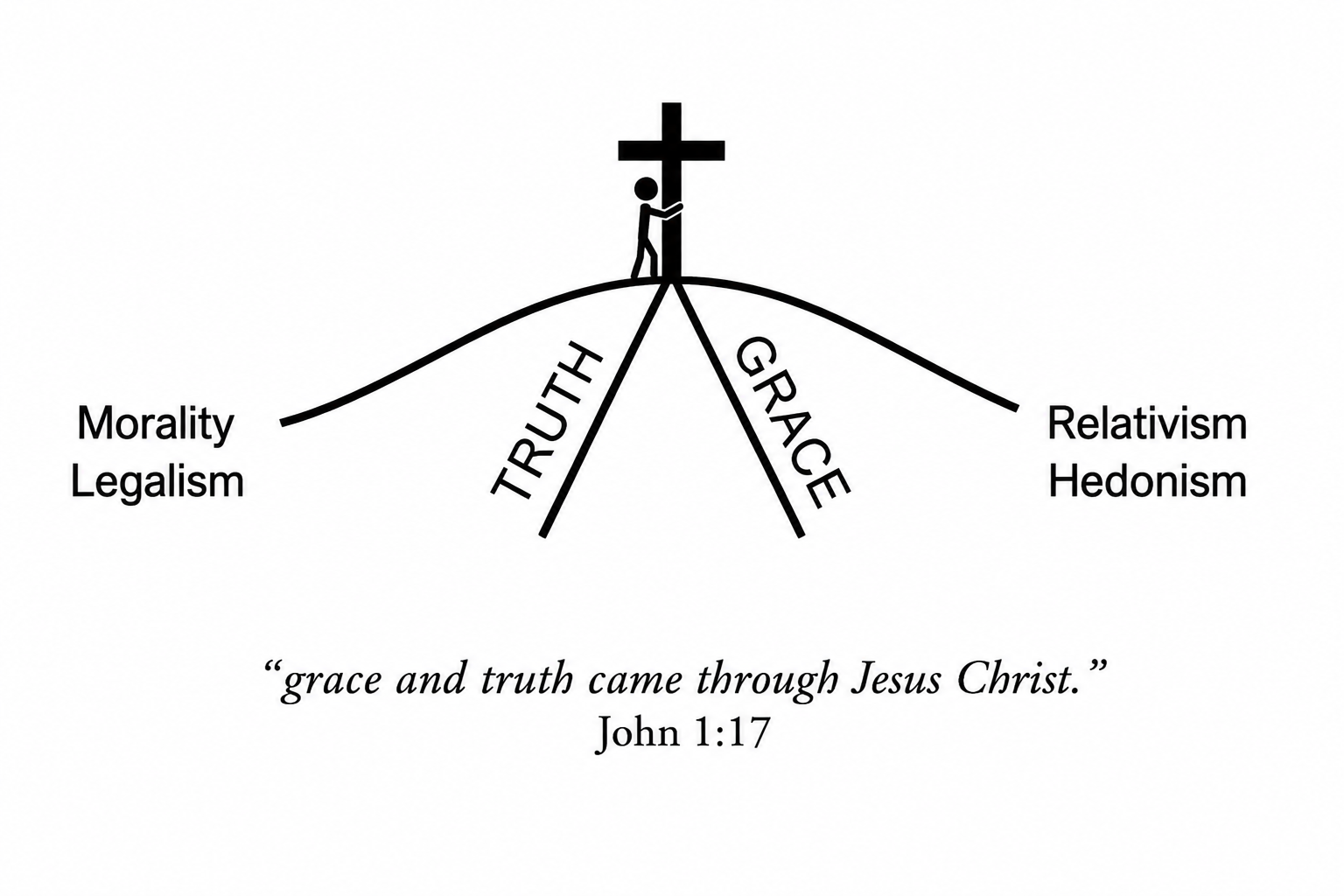
The gospel-centered life keeps us standing at the foot of the cross — deeply aware of our sin (truth) and deeply assured of God's love (grace). This is the only stable place to stand.
Morality / Legalism
Too much Truth without Grace
Moralism is the belief that we are made right with God through our moral performance, rule-keeping, and religious effort.
Symptoms:
- Defining yourself by what you do and don't do
- Feeling closer to God when you perform well
- Judging others by their moral failures
- Pride when you succeed, despair when you fail
- Fear-based obedience rather than love-based
TRUTH + GRACE
Jesus is the perfect balance — full of grace AND truth (John 1:14)
Relativism / Hedonism
Too much Grace without Truth
Relativism denies absolute moral truth. Hedonism makes pleasure and personal fulfillment the highest goal of life.
Symptoms:
- Using grace as a license to sin
- Minimizing the seriousness of sin
- Avoiding accountability and correction
- Treating God's commands as optional suggestions
- Cheap grace without genuine repentance
IDENTITY & TRANSFORMATION
The Wheel Illustrations
Self-Centered vs. Christ-Centered Life
These wheel diagrams illustrate the transformation that happens when we move from a self-centered life to a Christ-centered life through the gospel.
The Empty Wheel
A life without Christ — empty at the center, no direction or purpose

Before Christ, our lives are like a wheel with nothing at the center. We may be busy, active, even religious — but there is no true source of life, identity, or direction. The spokes have nothing to connect to.
This is the condition of every human heart apart from the gospel. We are spiritually empty, searching for meaning in things that cannot satisfy.
The Self Wheel
A life centered on self — self-reliance, self-absorption, self-centeredness
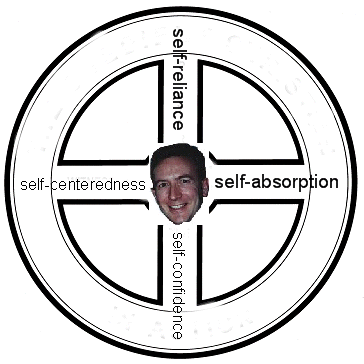
Many people fill the center of their wheel with self. The four spokes become:
- Self-reliance — I depend on my own strength and ability
- Self-absorption — Everything revolves around me and my needs
- Self-centeredness — My agenda, my comfort, my goals
- Self-confidence — I trust in my own judgment and wisdom
This is the default mode of the human heart. Even religious people can be self-centered — using God to achieve their own goals rather than surrendering to His.
The Christ Wheel
A life centered on Jesus — Loved, Accepted, Secure, Significant
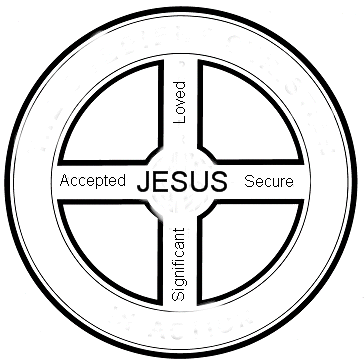
When Christ is at the center, everything changes. The four spokes become gospel realities:
- Loved — God's love for me is unconditional and eternal
- Accepted — I am fully accepted in Christ, not on the basis of my performance
- Secure — My security comes from God, not from circumstances
- Significant — My significance comes from being God's child, not from achievement
This transformation happens through the gospel. As we believe and apply the gospel to every area of life, Christ increasingly becomes the true center of our identity and motivation.
"The gospel frees us from the exhausting project of self-justification and self-promotion, and gives us a new center — Christ Himself."
DAILY PRACTICE
Preach to Yourself Daily
Applying the Gospel to Every Area of Life
As believers in Christ, we need to preach the gospel to ourselves every day. The gospel is not just the entry point of the Christian life — it is the ongoing power for Christian living.
Why Christians Need the Gospel Daily
- We forget the gospel. Our hearts naturally drift toward self-reliance and self-righteousness.
- We face daily temptations that can only be overcome by gospel power, not willpower.
- We experience guilt and shame that only the gospel can truly address.
- We need ongoing motivation for obedience — and the gospel provides the best motivation: love and gratitude.
- We live in a world that constantly preaches a different gospel — of self-improvement, achievement, and performance.
- Our sanctification depends on it: the same gospel that saves us also grows us.
The 3-Step Process
Identify the Lie
Every sin and every struggle is rooted in a lie we are believing. Identify the false belief that is driving your behavior or emotion. What are you believing about God, yourself, or the world that is not true?
"You will know the truth, and the truth will set you free." — John 8:32
Preach the Truth
Replace the lie with the specific gospel truth that addresses it. This is not positive thinking — it is preaching the objective facts of what God has done in Christ and what is now true of you in Him.
"Set your minds on things above, not on earthly things." — Colossians 3:2
Act in Faith
Act on the truth you have preached to yourself. This may be repentance, worship, forgiveness of others, courage in the face of fear, or simply resting in God's promises.
"Faith by itself, if it is not accompanied by action, is dead." — James 2:17
📅 Daily Practice
Each morning, spend 5-10 minutes reviewing a gospel truth. Ask yourself:
- What lie am I tempted to believe today?
- What gospel truth addresses it?
- How will I act in faith on that truth today?
This simple practice, done consistently, will transform your heart over time.
"Preach the gospel to yourself every day. Remind yourself of who you are in Christ — forgiven, accepted, righteous, loved, and secure. Let these truths sink deep into your heart until they shape your emotions, your decisions, and your relationships."
— Jerry Bridges, The Discipline of Grace
STUDY GUIDE
9 Gospel Lessons
Gospel-Centered Life Study Guide
These nine lessons walk through the core truths of the gospel and how they apply to every area of the Christian life. Designed for personal study or small group discussion.
JERRY BRIDGES
A Gospel Narrative
A personal meditation on the gospel for daily use
Read this narrative slowly, meditating on each truth. This is meant to be used as a daily devotional — a way of preaching the gospel to yourself each morning. Let each truth sink in before moving to the next.
My Identity in Christ
Because of Jesus Christ and His finished work on the cross, I am completely forgiven of all my sins — past, present, and future. God does not hold my sins against me. He has removed them as far as the east is from the west.
I am justified — declared righteous in God's sight — not because of anything I have done, but because of what Christ has done. His perfect righteousness has been credited to my account. I stand before God clothed in the righteousness of Christ.
I am adopted into God's family. I am His child. He is my Father. I have access to Him at any time, in any circumstance. He will never disown me, never abandon me, never stop loving me.
God's Unconditional Love
God's love for me is not based on my performance. He does not love me more when I do well and less when I fail. His love is constant, unconditional, and eternal — rooted in His own character, not in my behavior.
Nothing can separate me from the love of God in Christ Jesus — not my failures, not my doubts, not my worst sins, not my darkest moments. His love is the one thing in the universe that is absolutely secure.
He delights in me — not because I am impressive, but because I am His, and He has made me His own through Christ.
The Cross and My Sin
I am a sinner. My heart is prone to wander, prone to self-centeredness, prone to unbelief. I fail God every day in ways I am aware of and in ways I am not.
But Christ has dealt with all of it. On the cross, He bore the full weight of God's wrath against my sin. He was punished so that I would not be. He was forsaken so that I would never be forsaken.
Because of the cross, I can come to God honestly — without pretending, without performing, without hiding. I can confess my sin freely because I know I am already forgiven.
Living by the Gospel
Today, I will face temptations, failures, and difficulties. In those moments, I will preach the gospel to myself. I will remind myself of who I am in Christ and what He has done for me.
I will obey God not to gain His approval but because I already have it. I will serve others not to prove my worth but because my worth is already established in Christ. I will give generously because I have already received the greatest gift.
📝 Personal Application
Take a moment to identify one area of your life where you are not living by the gospel. Perhaps you are seeking approval from others, or living in fear, or trying to earn God's favor through performance. Preach the specific gospel truth that addresses that area. Then act in faith on that truth today.
"I have been crucified with Christ and I no longer live, but Christ lives in me. The life I now live in the body, I live by faith in the Son of God, who loved me and gave himself for me."
— Galatians 2:20
MEMORIZE
Scripture Memory
Key Gospel Verses to Hide in Your Heart
Memorizing Scripture is one of the most powerful ways to preach the gospel to yourself. These 12 key verses cover the core truths of the gospel. Tap any card to flip it and reveal the full verse.
THE TAIL OF THE FISH
The Fishtail Illustration
A Picture of Gospel-Driven Growth
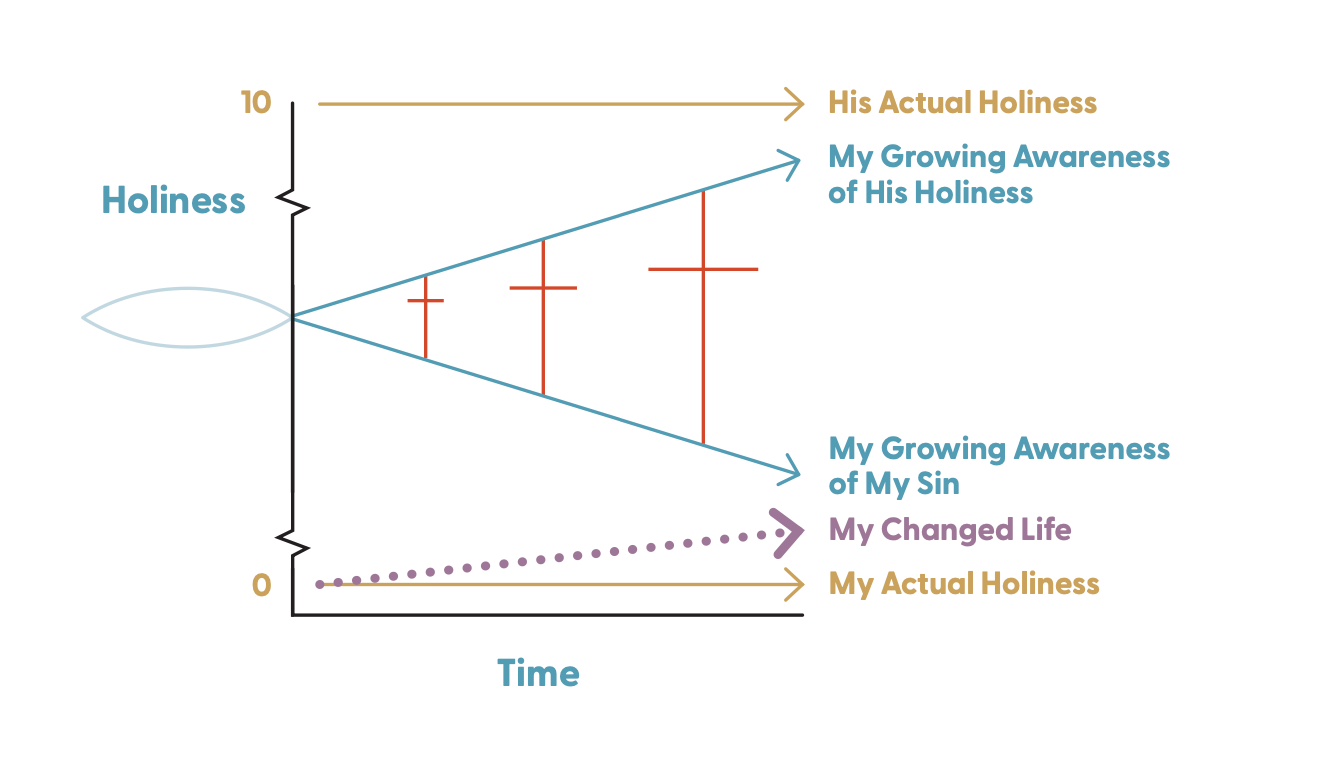
Most Christians picture their spiritual life as a single upward line — a steady march of moral improvement. But the Bible paints a very different picture. Real gospel-driven growth involves two lines moving simultaneously, and together they form the shape of a fish tail — or more precisely, the shape of a growing cross.
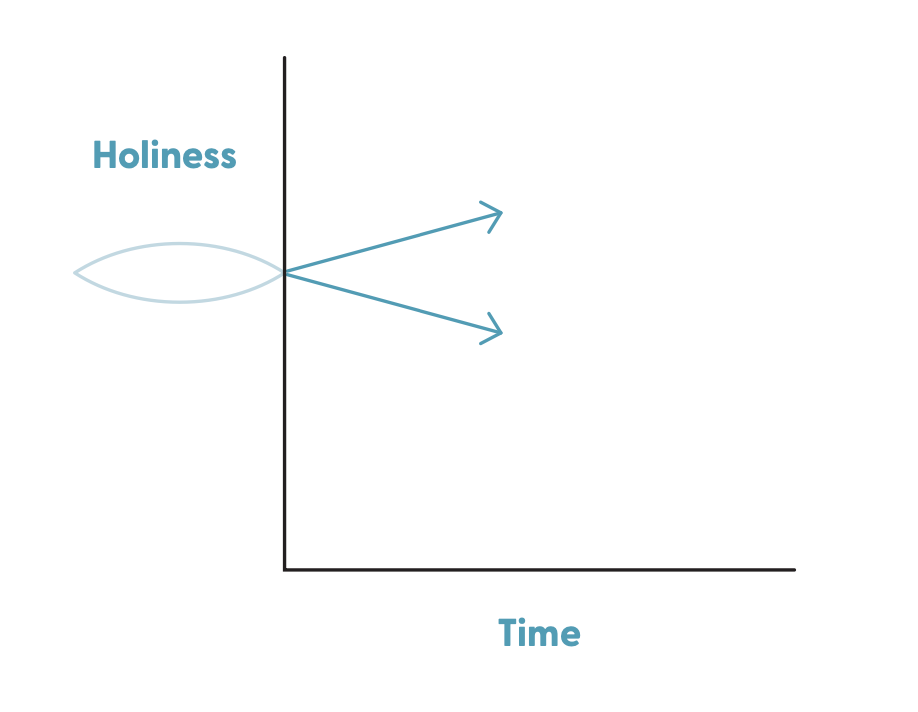
Stage 1: The Fishtail shape — two lines diverging from a single point over time, like the tail of a fish.
The Two Lines
As you grow in the gospel, you see God more clearly — His infinite holiness, His perfect righteousness, and the enormous gap between Him and you. This line moves upward.
Simultaneously, the gospel gives you clearer eyes to see your own sinfulness — not to condemn you, but to deepen your gratitude. This line moves downward.
"Real spiritual progression isn't moving up and to the right along a single line. It's simultaneously moving further along two lines. Progress on the Dotted Line (what others will see as the changes in your life as you grow in Christ) comes as your heart is filled with gratitude for what He's done for you, and your life begins to change. That's Gospel-driven transformation from the inside out."
— The Tail of the Fish
The Growing Cross
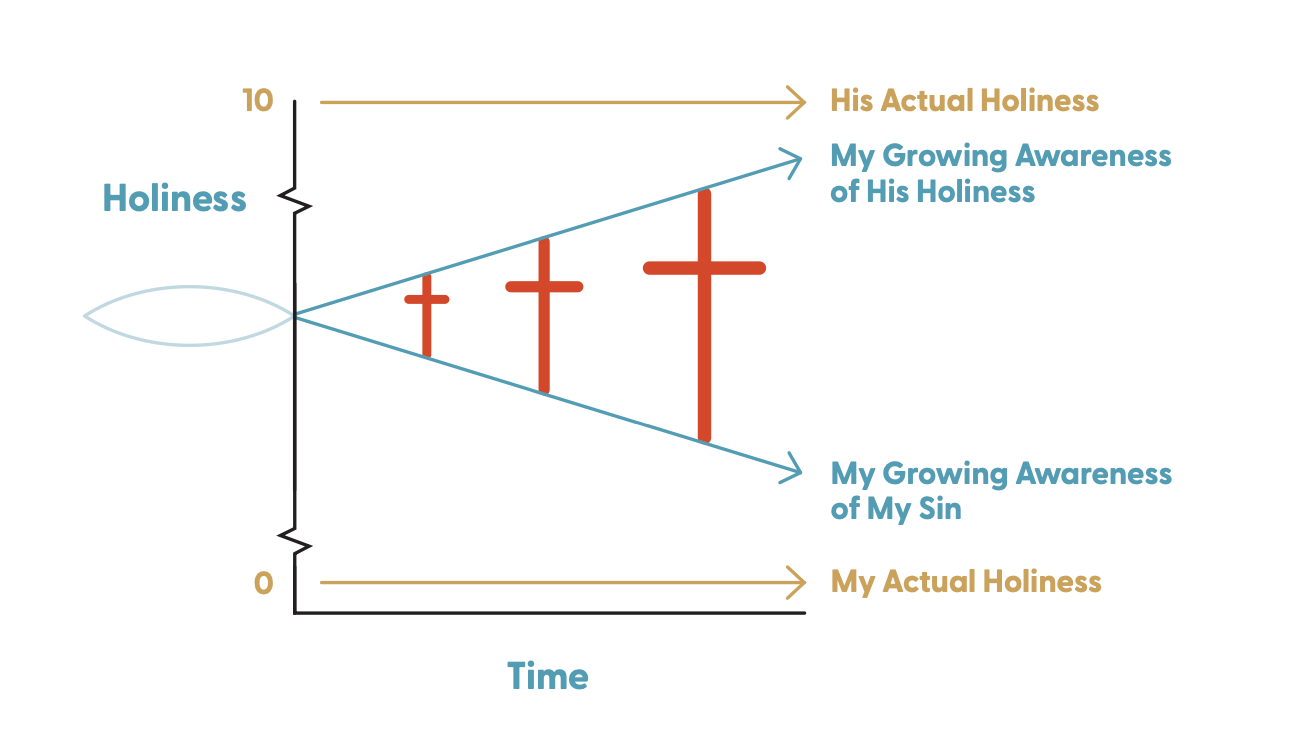
As both lines grow — your awareness of His holiness upward, your awareness of your sin downward — the cross at the center grows larger. This is the heart of the Fishtail: the bigger your view of the gospel, the more the cross fills your life.
The Two Lines Labeled
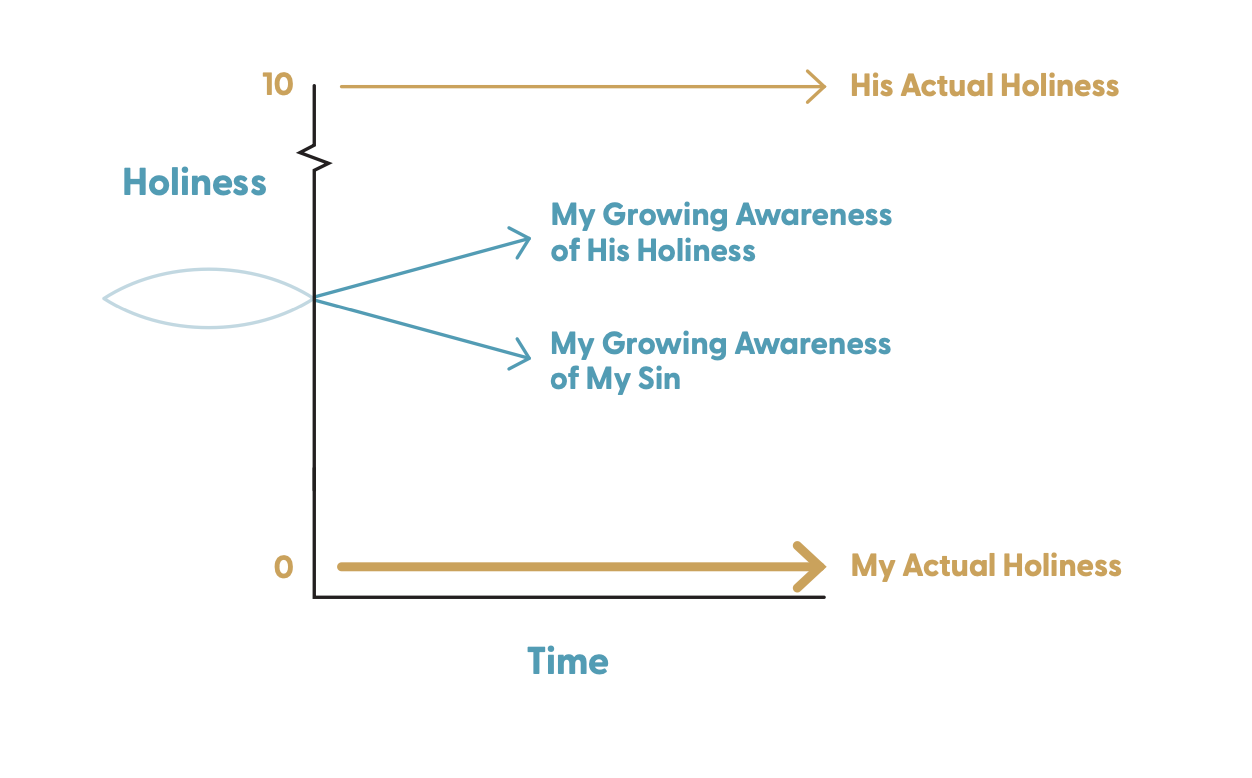
The upper line represents My Growing Awareness of His Holiness — God's holiness is at 10, and as you grow in the gospel you see Him more clearly. The lower line represents My Growing Awareness of My Sin — your actual holiness stays near 0, but your awareness of how far you fall short deepens.
The Cross Appears
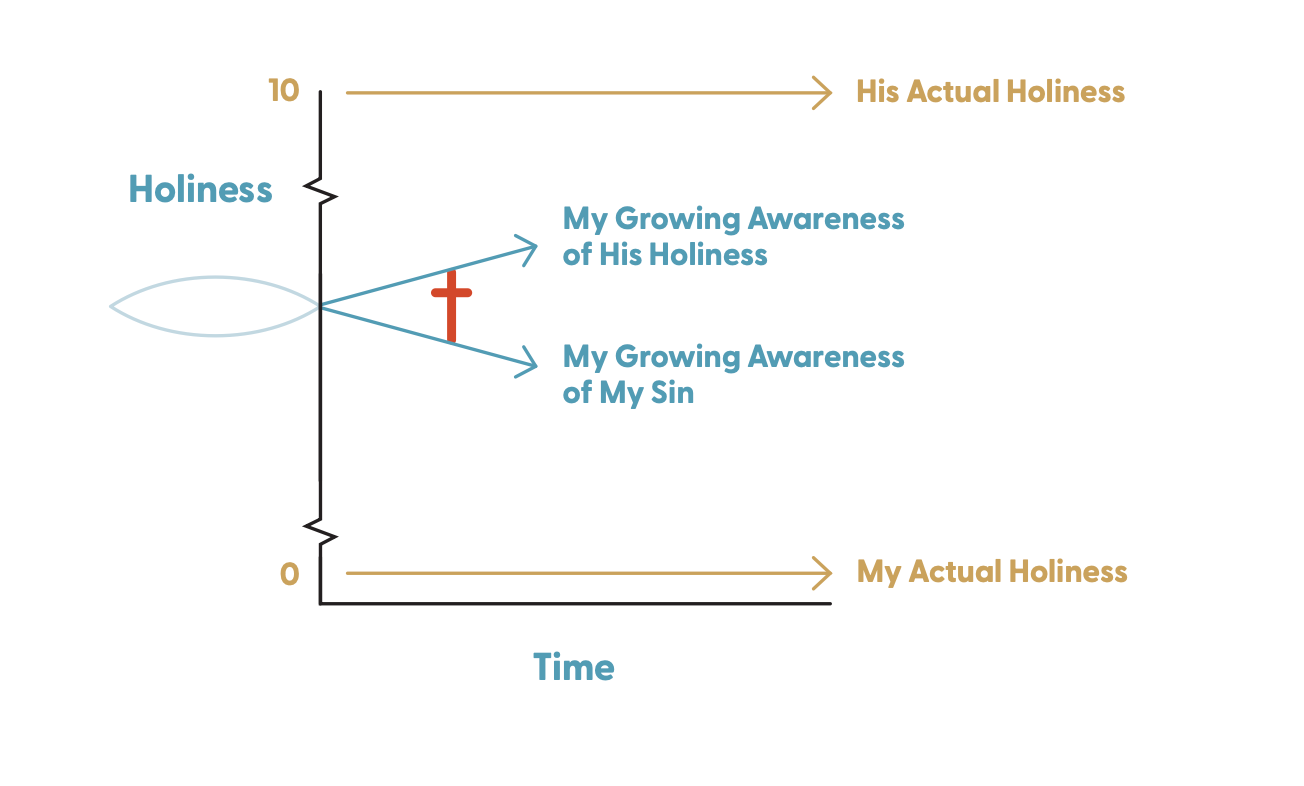
At the point where the two lines diverge, a cross appears. The gap between God's holiness and your sin is exactly the gap the cross of Jesus Christ was designed to fill. The cross stands at the intersection — this is the gospel.
The Cross Grows
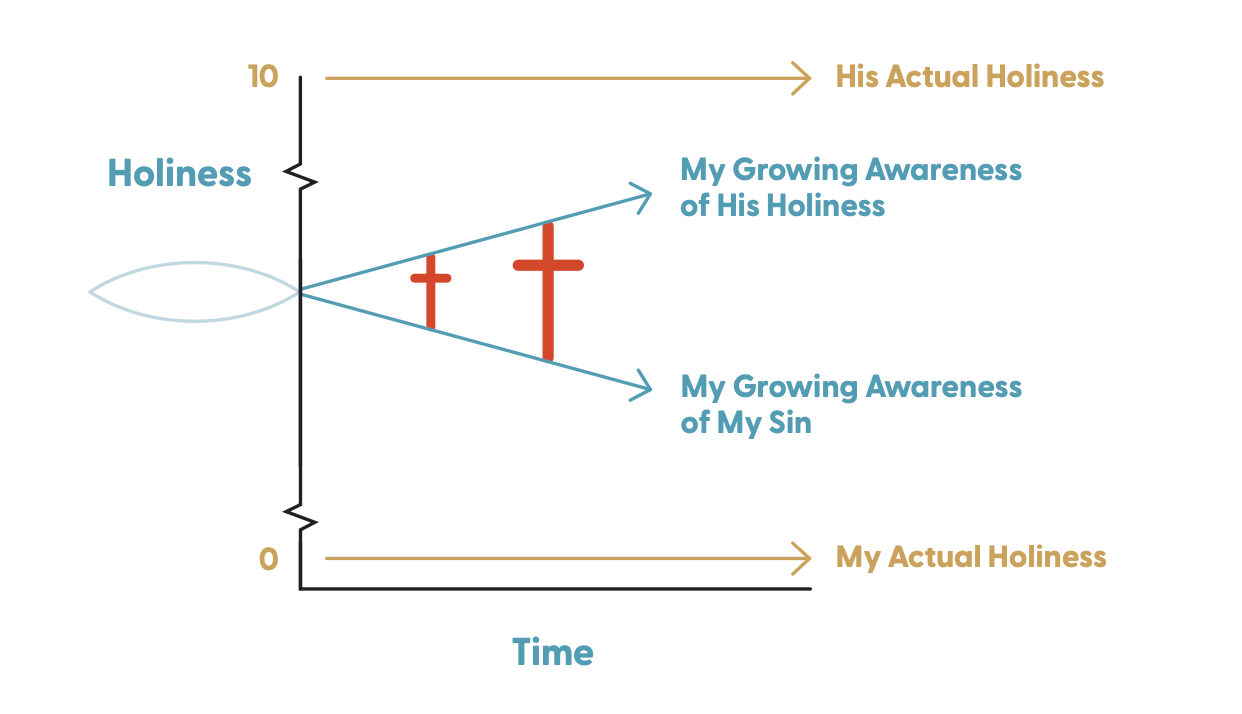
As time passes and both lines continue to diverge, the cross grows larger. Real spiritual growth is not moving up a single line of moral improvement — it is the cross becoming bigger and more central to your life as your awareness of both God's holiness and your own sin deepens.
The Growing Cross at the Center
Three crosses at increasing sizes show the progression of gospel-driven growth. The further along the two lines you travel — the more clearly you see His holiness and your sin — the larger the cross becomes at the center of your life. This is the Fishtail in full view.
My Changed Life
The final diagram adds a dotted line rising from the bottom — labeled My Changed Life. This is the fruit of gospel-driven sanctification. As the cross grows larger at the center, your actual life begins to change — not through willpower or law-keeping, but through the overflow of gratitude for what Christ has done. This is transformation from the inside out.
The Single Line vs. The Dotted Line
❌ The Single Line (Legalism)
Basing your justification on your sanctification. You measure your standing with God by how well you are performing. This leads to either pride (when you're doing well) or despair (when you're not).
"Dead Orthodoxy results when I basically, psychologically, day to day base my justification on my sanctification." — Tim Keller
✅ The Dotted Line (Gospel)
Basing your sanctification on your justification. You live from a place of already being declared righteous in Christ. Change flows from gratitude, not fear. This produces freedom, power, and lasting transformation.
"Vitality, power, freedom comes when I base my sanctification on my justification." — Tim Keller
Key Scripture: "Are you so foolish? After beginning with the Spirit, are you now trying to finish by means of the flesh?" — Galatians 3:3
And: "He who began a good work in you will bring it to completion at the day of Jesus Christ." — Philippians 1:6
THE TAIL OF THE FISH
Two Great Sins & The Seven S's
The Barriers to Gospel Growth — and the Gospel's Answer
Every great Christian sermon, book, or article addresses one or more of the Two Great Sins or the Seven S's. Together they form a concise definition of the Gospel and the Gospel-driven life. If you don't hear at least one of them, it's probably not a truly Gospel-centered message.
The Two Great Sins
There are two core sins that will keep you from accepting the Gospel — or from growing in Christ once you do.
"I am not a bad person."
No one thinks of themselves as truly bad. Even the worst dictators in history didn't see themselves as villains. This blindness to our own sinfulness is the first great barrier to the gospel. We can acknowledge that others have sin problems, but we minimize our own. Jesus addressed this directly: "Why do you look at the speck in your brother's eye, but do not notice the log in your own eye?" (Matthew 7:3)
"No one, but no one, tells me what to do."
To come to saving faith, you must admit that there is someone bigger and better than you — and willingly come under His authority. God only wants willing subjects, not forced ones. This second great sin keeps us from the surrender that the gospel requires. Even after salvation, it keeps us from growing, because we keep trying to run our own lives rather than resting in what Christ has done.
The Seven S's of the Gospel
These seven words — all beginning with S — summarize the Gospel-driven Christian life. Every great gospel truth maps to one or more of them.